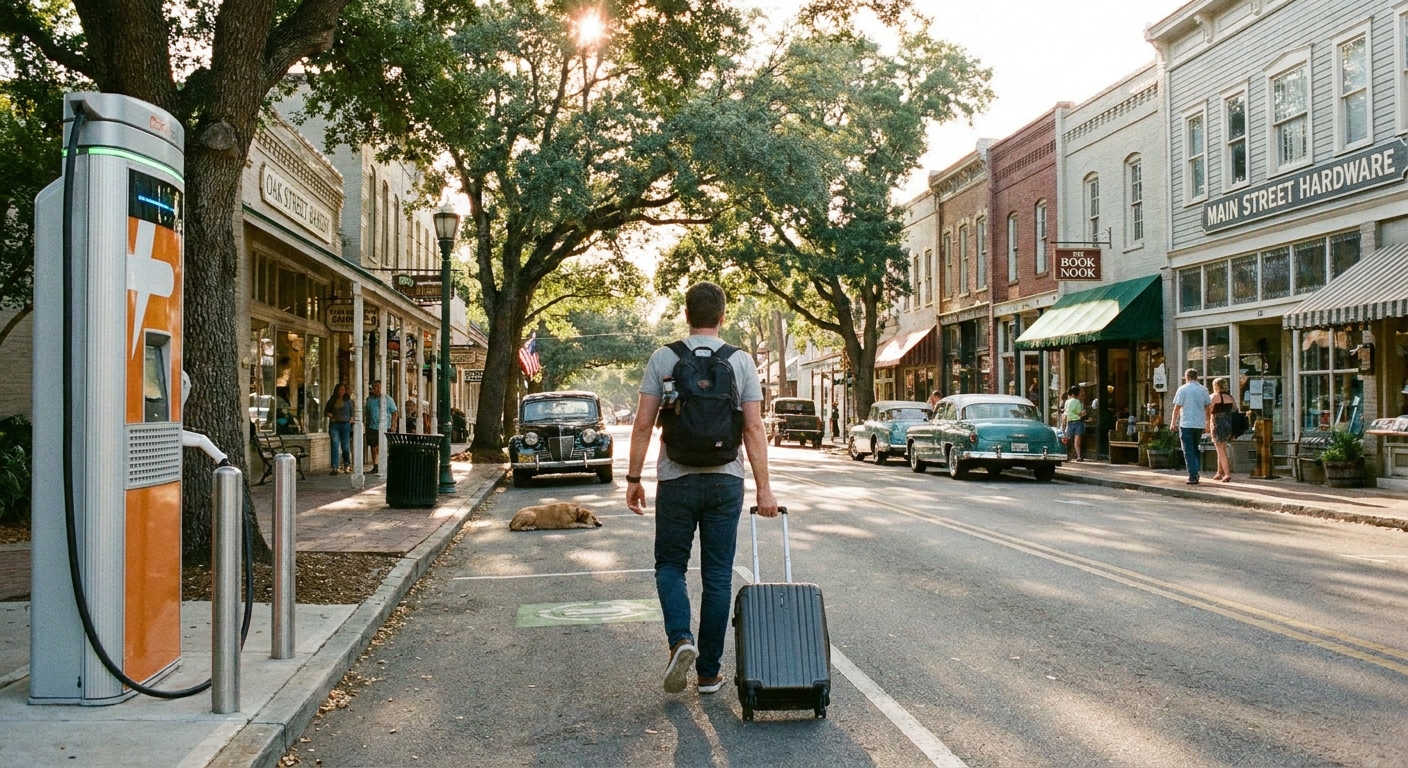

I grew up in a military family, which meant “home” changed a lot. My coping skill was always the same: land in a new place, pull up a map, and find the best local slice of life fast. These days, I do the same thing on road trips, especially in an EV. The secret is simple: I stop treating charging as dead time and start treating it like a tiny, walkable day trip.
If you have 45 minutes plugged in, you often have time for a riverside loop, a bookstore browse, a historical marker detour, or the kind of mom-and-pop lunch you never would have found if you stayed in the car scrolling. Just remember that charge time can swing based on your vehicle, battery temperature, starting percentage, stall power, and whether you have to wait for a plug.
The mindset shift
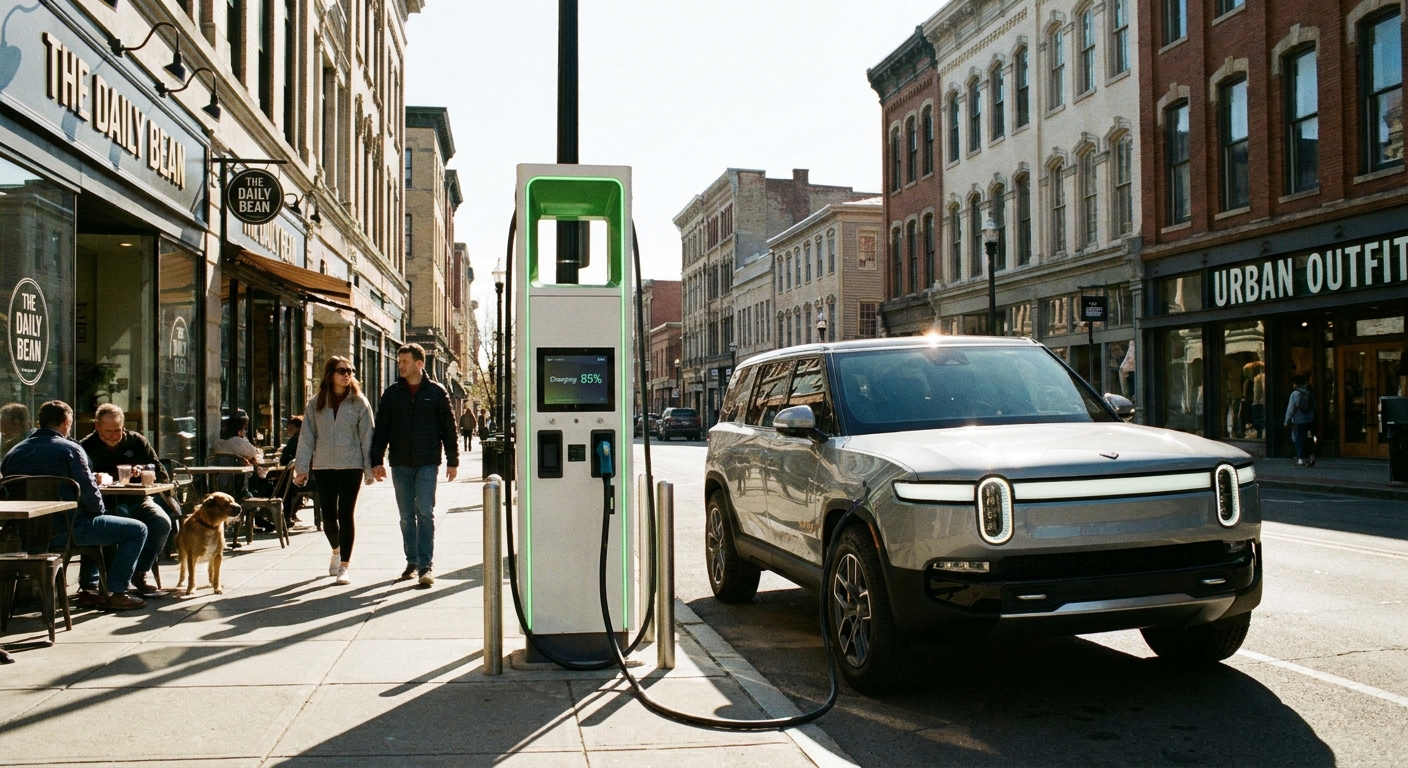
Most EV routing starts with one question: “Where can I charge?” My favorite EV routing starts with a better one: “Where can I charge and take a quick, satisfying walk?”
When you choose charging stations that sit inside real neighborhoods, your trip gets easier in a sneaky way:
- You arrive less stressed because you already know what you are doing while you wait.
- You waste less time because you are not driving around hunting for food or bathrooms after you plug in.
- You see more even on long highway slogs, because each stop becomes its own mini destination.
This pairs perfectly with the My ZIP Code Map way of planning. Pick a point on the map, then build a micro-itinerary around it. If you are new to that idea, start with how to plan a 5-mile radius day trip from any zip code and then bring that same logic to your charging stops.
Step 1: Pick anchor chargers
Before you add detours, decide on your anchor points. These are the charging stops that make the trip work at a basic level.
What makes a good anchor charger
- Close to the highway, but not stranded. I love chargers that are 2 to 8 minutes off the interstate, ideally in a town center or near a mixed-use area.
- Multiple stalls or plugs. More stalls usually means less stress if one is down or busy.
- Walkable “stuff” within 0.2 to 0.7 miles. Think coffee, a park, a main street strip, a museum, a riverwalk, a public library.
- Restrooms you can count on. If nothing else, make sure there is a reliable restroom option during business hours.
Once you have anchors, you can turn each one into a mini day trip by zip code. If you want a road trip planning companion approach, my other favorite framework is road trip pit stops by zip code.
Step 2: Scan the zip code
Here is the trick I use constantly: after I pick a charger, I grab the zip code of that charger’s address and treat it like a search key for micro-adventures (I usually just copy it from the station details screen).
Even if you are using a charging app for availability, zip code searching helps you quickly answer the questions that matter for a short layover:
- Is there a real downtown, or is this purely a big-box lot?
- Is there a park or a scenic overlook close enough for a fast loop?
- Are there any historical markers, quirky local museums, or public art nearby?
- Where can I get a good snack without adding a 15-minute drive?
If you ever debate whether to search by city name or zip code, this is the exact use case where zip code wins. It keeps you tight around the actual area you will be parked in. I break that down here: city name vs. zip code search.
Step 3: Build a short loop
My goal at a charging stop is never to use every last minute. It is to have a loop that feels complete even if the station finishes early, I decide to leave at 80 percent, or charging slows down.
A quick arrival checklist
- Start the session and confirm it is actually charging.
- Check the car or charger estimate so you know your real window.
- Set alerts if you have them, and set a simple phone timer as backup.
- Spot the restroom plan before you walk off.
A reliable 45-minute loop formula
- Minute 0 to 5: Plug in, start the session, set your target, quick windshield check.
- Minute 5 to 25: Walk to a single main attraction (park, historic site, main street, viewpoint).
- Minute 25 to 35: Grab a fast item (coffee, pastry, sandwich to-go).
- Minute 35 to 45: Walk back with a buffer. Unplug and roll out without rushing.
To keep it realistic, I cap most loops at 1.2 to 1.8 miles total, depending on weather and who is traveling with me.
Two rules that prevent late returns
- Build the loop outward first. Go to the farthest point early so the return is always shorter.
- Choose one primary mission. Park walk or lunch sit-down or museum. Trying to do all three in 45 minutes turns fun into frantic.
What to do while charging
Here are mini-trip ideas that consistently work inside typical fast-charge windows. Mix and match based on what the zip code offers.
1) Scenic reset
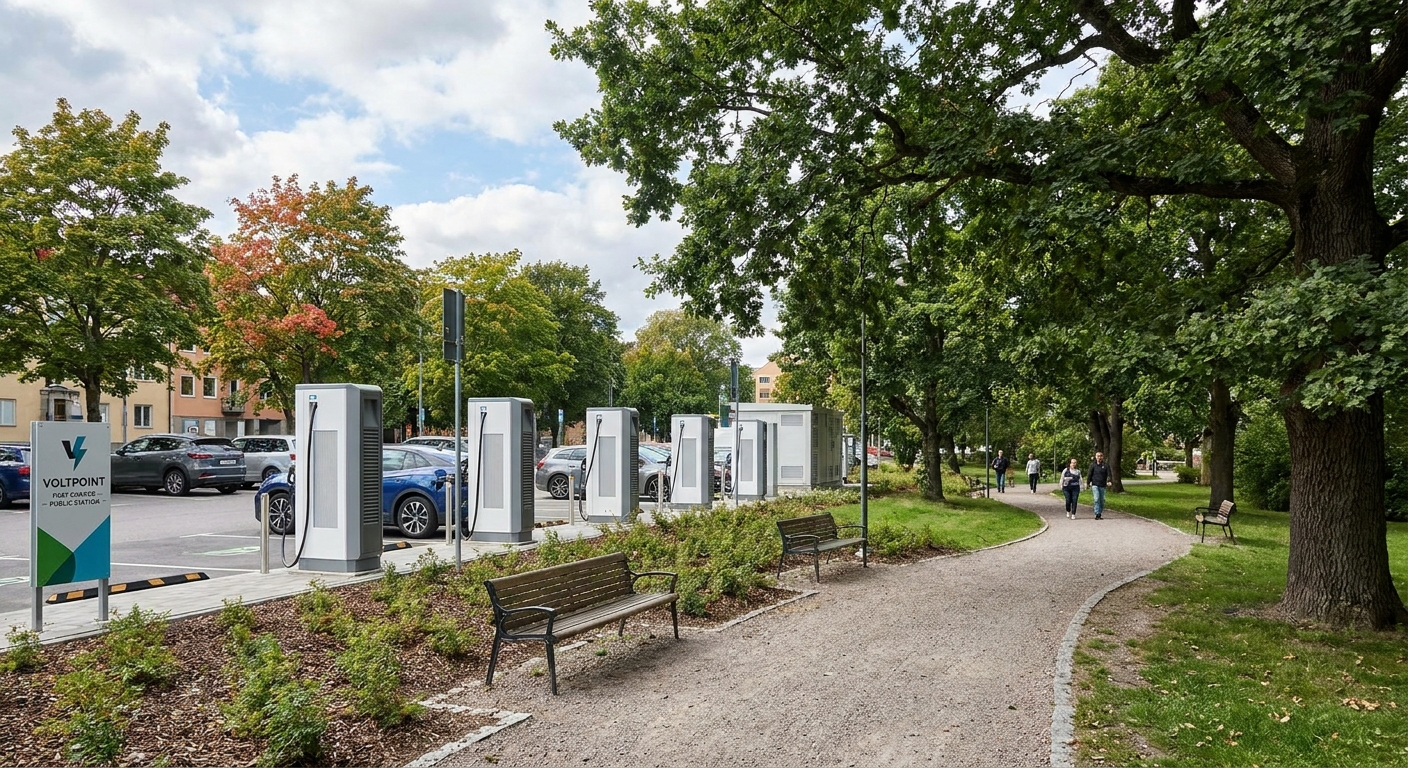
Look for a city park, river trail access, botanical garden, or overlook close to the charger. If you need help finding views without overplanning, I keep a whole approach to this here: find scenic overlooks by zip code.
2) Quick history
I love a stop that teaches me one hyper-local thing I did not know. Even a single historical marker makes a charging stop feel like a story instead of a chore.
If you want to build a short “history loop,” use this method: find historical markers by zip code.
3) Coffee and main street
If the charger is near a downtown strip, I pick one cafe and one extra stop, like a bookstore, bakery, or local gift shop. It is amazing how much better you feel after walking two blocks and having a good espresso instead of eating chips in the driver seat.
Want to make it food-forward? I plan these stops the same way I plan any micro-trip meal hunt: find hidden gem restaurants with a zip code.
4) Indoors for bad weather
For rain, heat, or winter wind, I look for:
- public libraries (restrooms, water fountains, air conditioning, and most are welcoming to travelers who are respectful)
- local history museums
- covered markets and small indoor food halls
Even 20 minutes inside somewhere calm makes the rest of the drive feel shorter.
How I check walkability
I do a fast reality check before I commit to a charging stop as a mini trip:
- Sidewalk check: Are there sidewalks or safe shoulders between the charger and my destination?
- Crossing check: Is there a major stroad crossing that will slow me down or feel unsafe?
- Terrain check: Is the walk flat-ish, or are we talking steep hills that will eat time?
- Timing check: Am I arriving late evening when everything is closed?
If any of those fail, I still use the charger, but I switch to an “on-site” mini trip: stretch, snack, journal, clean out the car, or plan the next stop.
Turn a charge into a micro-itinerary
If you want the charging stop to feel like a true mini day trip, you need one more piece: a plan that is anchored to distance, not vibes.
My radius tweak for EV stops
Normally, I love planning in a 5-mile radius. For charging stops, I use a smaller version:
- Walk radius: 0.7 miles from the charger
- Optional no-car radius: up to 2 miles, but only if you can get there without moving your car (for example: a short rideshare, local shuttle, transit, or a bike that stays with you)
This is also where charging reality matters: if your session could finish early, your location charges idle fees, or the site has a “stay with your vehicle” policy, keep your loop extra tight and stay close enough to return quickly.
EV etiquette that keeps it easy
- Set a realistic target. If you only need enough to reach the next anchor charger, do that. Overcharging is the fastest way to turn a fun walk into a clock-watching session.
- Use notifications, and back them up. Many vehicles and charging networks can alert you when you hit a percentage or when charging is nearly complete. I still set a phone timer because alerts are not always consistent.
- Do not block a stall after you are done. If your session ends, head back. Your future self will appreciate it when the lot is busy on the next trip.
- Keep your return buffer sacred. I treat the last 10 minutes as untouchable walk-back-and-unplug time.
A sample 45-minute stop plan
Here is a generic plan that works in most mid-size towns:
- Plug in. Start charge and set a target that gets you to the next stop with a cushion.
- Confirm your window. Check the estimated time, then set an alert and a backup timer.
- Walk to the town green or riverwalk. Do a 15-minute out and back.
- Pick one treat. Coffee, pastry, or a to-go sandwich from a local spot.
- Optional bonus: If there is a historical marker within one block, read it. That is your “story souvenir.”
- Return early. Unplug with time to spare, quick bathroom, wipe down windshield, roll out.
Want more themed day ideas you can plug into these stops? Browse the Road Trips hub: Road Trips guide.
Common pitfalls
“We chose a charger with nothing around it.”
Fix: Keep one anchor stop per day that is explicitly chosen for walkability and food. You do not need every charge to be cute, just enough to keep the trip fun.
“The walk looked close, but it was not safe.”
Fix: Do the sidewalk and crossing check before you leave the car. If it feels sketchy, pivot to an on-site reset or a close, well-lit option.
“We got hungry and wasted the whole stop deciding.”
Fix: Pre-pick one food option in the charger’s zip code before you arrive. One decision made ahead of time is the entire game.
“Charging finished earlier than expected.”
Fix: Build loops that can be shortened. Out-and-back paths are your friend.
Stops feel shorter with a story
My favorite EV days on the road are not the ones where everything is perfectly optimized. They are the ones where I can name the tiny moments: the shaded park bench three blocks from a charger, the diner pie slice I never would have tried, the random marker that taught me why the town exists at all.
If you want to keep turning practical stops into mini adventures, you will probably also like plan a local day out beyond a zip code. That is the whole philosophy in one place, and it travels beautifully.